

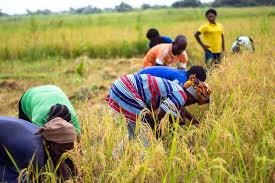
In a world ruled by giant agribusinesses with glossy brochures and deeper pockets than a winter coat, Nigeria’s small-scale farmers are doing something rather remarkable — they are holding their own. Quietly. Steadily. And often without applause.
These farmers form the true backbone of agriculture in Nigeria. Their tools may be simple, their plots modest, and their access to funding frustratingly thin, yet they continue to feed millions and even push their produce beyond the country’s borders. Not bad for people who are sometimes treated as an afterthought in policy meetings held in air-conditioned rooms.
From cassava and cocoa to groundnuts and palm oil, smallholder farmers grow a large share of the crops that keep kitchens busy and markets lively. According to the Food and Agriculture Organisation, roughly 80 per cent of Nigeria’s food supply comes from these farmers. Eighty per cent. Which means if small-scale farmers ever decided to take a day off all at once, the country would notice before lunchtime.
Competing globally is not a romantic countryside story. It is hard, muddy work. Bad roads slow transport, Limited access to quality seeds and fertiliser reduces yields, Unpredictable weather keeps farmers guessing. and getting affordable loans can feel like trying to borrow money from someone who suddenly “forgets” your name. All of this makes scaling up production extremely difficult.
Still, many farmers are pushing forward. Reports from the Nigerian Export Promotion Council show rising exports of cocoa and cashew nuts, driven largely by farmers who meet international quality standards and partner with exporters.
Support is also coming from institutions such as the African Development Bank, which provides training, financing, and programmes designed to make agriculture more competitive and profitable. Slow progress? Yes. Real progress? Also yes.
Technology is beginning to tilt the balance. Mobile apps now connect farmers directly with buyers, trimming the long chain of middlemen who used to take the biggest slice of the profit pie. Digital platforms provide weather updates and market prices, helping farmers make smarter choices instead of hopeful guesses.
Even more encouraging is the growing number of young people entering agriculture — smartphones in one hand, ambition in the other. Farming, once seen as a last resort, is quietly becoming a space for innovation.
Who would have thought the future of food might come with a charging cable?
Global demand for organic and sustainably produced food is rising, and Nigerian farmers who adopt these methods are discovering better prices abroad. Health-conscious consumers want traceable, ethical produce — and small-scale farmers are often well placed to provide exactly that.
Sometimes, being small is actually an advantage. For real transformation, good intentions must meet practical action: Better rural roads and storage facilities, Easier access to affordable finance, Investment in processing to reduce waste and Stronger protection from unfair trade practices. In short, farmers need more than praise. They need policy that works.
Nigeria’s small-scale farmers are not merely surviving; they are adapting, innovating, and slowly carving out space in a fiercely competitive global market. Their journey is not loud, but it is powerful — a story of resilience written in soil, sweat, and stubborn hope.
And perhaps the real lesson is this:
while the world often celebrates the biggest players, it is the smallest farmers who keep the table full.
They deserve more than a passing mention.
They deserve the spotlight.