

Skip to content
Inside The Headline insidetheheadline Inside The Headline

The Story Behind The Story

Inside The Headline insidetheheadline Inside The Headline

The Story Behind The Story

  • Home
  • Features
    • Business Turf
    • Politics
    • Health
    • 2026 Elections
    • Diasporametrics
    • Entertainment
    • Arts Lens
    • Education
    • Sports
  • Specials
    • Profiles
    • Throwback Lounge
    • Podcast
    • Features
    • Market Place
  • Reading Nooks & Crannies
    • RNC 2026
    • Sponsorship | Partnership
    • Read a Story
    • About RNC
    • Our Team
    • More
      • Privacy Policy
      • Volunteer
      • Opportunities
  • Contact
  • Home
  • Features
    • Business Turf
    • Politics
    • Health
    • 2026 Elections
    • Diasporametrics
    • Entertainment
    • Arts Lens
    • Education
    • Sports
  • Specials
    • Profiles
    • Throwback Lounge
    • Podcast
    • Features
    • Market Place
  • Reading Nooks & Crannies
    • RNC 2026
    • Sponsorship | Partnership
    • Read a Story
    • About RNC
    • Our Team
    • More
      • Privacy Policy
      • Volunteer
      • Opportunities
  • Contact
Close

Search

  • https://www.facebook.com/
  • https://twitter.com/
  • https://t.me/
  • https://www.instagram.com/
  • https://youtube.com/
Subscribe
Inside The Headline insidetheheadline Inside The Headline

The Story Behind The Story

Inside The Headline insidetheheadline Inside The Headline

The Story Behind The Story

  • Home
  • Features
    • Business Turf
    • Politics
    • Health
    • 2026 Elections
    • Diasporametrics
    • Entertainment
    • Arts Lens
    • Education
    • Sports
  • Specials
    • Profiles
    • Throwback Lounge
    • Podcast
    • Features
    • Market Place
  • Reading Nooks & Crannies
    • RNC 2026
    • Sponsorship | Partnership
    • Read a Story
    • About RNC
    • Our Team
    • More
      • Privacy Policy
      • Volunteer
      • Opportunities
  • Contact
  • Home
  • Features
    • Business Turf
    • Politics
    • Health
    • 2026 Elections
    • Diasporametrics
    • Entertainment
    • Arts Lens
    • Education
    • Sports
  • Specials
    • Profiles
    • Throwback Lounge
    • Podcast
    • Features
    • Market Place
  • Reading Nooks & Crannies
    • RNC 2026
    • Sponsorship | Partnership
    • Read a Story
    • About RNC
    • Our Team
    • More
      • Privacy Policy
      • Volunteer
      • Opportunities
  • Contact
Close

Search

  • https://www.facebook.com/
  • https://twitter.com/
  • https://t.me/
  • https://www.instagram.com/
  • https://youtube.com/
Subscribe
Home/2026 Elections/A Digital Divide: Nigeria’s Struggle With Electronic Voting
2026 Elections

A Digital Divide: Nigeria’s Struggle With Electronic Voting

By OLORIMETSUDA
February 10, 2026 3 Min Read
0

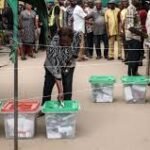
As Nigeria prepares for elections in 2027, a familiar storm of controversy is brewing around the role of technology in its democratic process. At the heart of the debate are two interlinked ideas: electronic voting and electronic transmission of results. Both are touted by reformers as tools to clean up decades of disputed elections — yet both have exposed deep divisions, technical shortcomings and political hesitations.

Nigeria’s flirtation with election technology didn’t start yesterday. Back in 2015, the Independent National Electoral Commission (INEC) began experimenting with smart card readers intended to verify voters electronically. By 2021, a more advanced system called the Bimodal Voter Accreditation System (BVAS) was rolled out to replace the older machines. BVAS uses fingerprint and facial recognition to authenticate voters and was paired with an online Result Viewing Portal (IReV) designed to make results transparent and viewable in real time.

For millions of Nigerians, this sounded like progress — a way to curb age‑old fraud, boost confidence and ensure votes counted. And in some respects it did. Researchers found BVAS was effective at reducing impersonation and multiple voting, with respondents in the Federal Capital Territory saying it significantly improved voter accreditation.

But the honeymoon was brief; technical and logistical shortfalls quickly exposed the limitations of these systems. During the 2023 general elections, BVAS machines often arrived late, malfunctioned, or lacked network connectivity. In several areas, results intended for IReV simply failed to upload at all, fuelling suspicion and frustration among voters and civic groups alike.

In Kano and Kaduna states, election officials spoke of poor internet and forgotten passwords preventing real‑time uploads of results, underscoring how fragile the system was in practice. And yet while IReV’s goal was transparency, data from thousands of polling units never made it online on time, leaving many Nigerians sceptical of the technology’s benefits.

The technical problems might have been forgivable if political elites united behind reform. Instead, they became the battleground.

Earlier this year, Nigeria’s Senate initially rejected making real‑time electronic transmission of results mandatory, a decision that triggered public outcry and widespread criticism from civil society, legal bodies and labour unions. Critics warned that allowing manual collations to substitute for digital transmission leaves gaping loopholes for result manipulation — the very problem reformers said technology should fix.

Under pressure, lawmakers quickly reversed course, voting to support real‑time transmission and agreeing to harmonise the electoral act before it reaches the President’s desk. But this flip‑flop revealed more than uncertainty: it highlighted how politics and mistrust are at least as big a barrier to electoral reform as technology itself.


Is Nigeria Ready for True Electronic Voting?

There’s another layer to the debate: true electronic voting, meaning where ballots are cast and transmitted digitally at the point of voting, bypassing paper entirely.

Sceptics argue this is a fantasy in a country where electricity, internet coverage and technical infrastructure remain patchy, especially in rural areas. Abiodun Ajiboye of the National Institute of Cultural Orientation recently described electronic voting as “simply not possible” at present, saying Nigeria lacks the infrastructure to support it reliably.

On the other hand, advocates point to successful pilot projects like e‑voting in Kaduna State’s local elections as proof that well‑executed digital voting is achievable, at least on a smaller scale.

But the two sides agree on one thing: Nigeria is far from fully realising a robust, end‑to‑end digital voting system.

Perhaps the most intractable issue isn’t wires or networks — it’s trust.

For years, public confidence in the electoral process has been eroded by stories of altered tallies, delayed results and contested outcomes. Even when technology has been deployed, delays and apparent glitches opened a vacuum of mistrust, amplified by weak communication from INEC about what exactly went wrong.

If technology is to be part of the solution, many Nigerians say, then communication and accountability must improve too. For now, BVAS and IReV remain symbols of both hope and frustration — a reminder that in a young democracy, innovation alone cannot fix age‑old political problems.

Author

OLORIMETSUDA

Follow Me
Other Articles
Previous

National stability rests on lifting the poorest, Tinubu tells NEC

Next

Nigeria’s Democracy at a Crossroads

No Comment! Be the first one.

Leave a Reply Cancel reply

Your email address will not be published. Required fields are marked *

Recent Posts

  • Why Nigeria’s Hustle Culture Is Both a Lifeline and a Loop
    by JENROLATEMI
    February 14, 2026
  • The Future of Artificial Intelligence in Daily Life: A New Dawn or a Quiet Revolution?
    by Chief Editor
    January 5, 2025
  • Nigeria Seizes a Rare Global Stage As Babalola Emerge Rotary International President
    by OLORIMETSUDA
    September 1, 2025
  • Water Crisis in Nigerian Cities: Who’s Really Responsible?
    by OLORIMETSUDA
    September 1, 2025

Search...

Technologies

ASHERS TENT MEDIA

Media Lobbying | Brand Consultancy

METSUDA
DaVinci Resolve 20

Professional video and graphic editing tool.

Illustrator

Create precise vector graphics and illustrations.

Photoshop

Professional image and graphic editing tool.

insidetheheadline
insidetheheadline

INSIDE THE HEADLINE is the premium news analysis platform for readers who demand more than headlines. We provide clarity, insight, and context, revealing the story behind the story.

  • Facebook
  • X
  • Instagram
  • LinkedIn

Latest Posts

  • Why Nigeria’s Hustle Culture Is Both a Lifeline and a Loop
    In Nigeria today, “hustle culture” is not just a trendy… Read more: Why Nigeria’s Hustle Culture Is Both a Lifeline and a Loop
  • When the Badge Fails to Reassure: Policing, Pain and the Quest for Justice
    On the streets of many nations, from Lagos to Nairobi,… Read more: When the Badge Fails to Reassure: Policing, Pain and the Quest for Justice
  • When NEPA Becomes a Lifestyle Coach: Lessons in Patience
    In Nigeria, electricity isn’t just a utility—it’s a life teacher.… Read more: When NEPA Becomes a Lifestyle Coach: Lessons in Patience

Pages

  • About
  • Contact
  • Profiles
  • Shop
  • Typography
  • Terms and conditions

Contact

Email

info@insidetheheadline.com

Location

Abuja, Nigeria

Copyright — Inside The Headline. All rights reserved.