

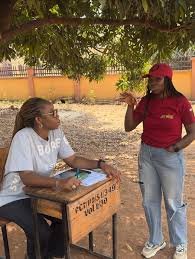

In Abuja’s usually bustling political atmosphere, the silence at many polling units during the Federal Capital Territory (FCT) mock council elections spoke volumes. The Independent National Electoral Commission (INEC) says it is worried—deeply worried—about the low turnout of voters who were expected to test-run the system ahead of this month’s Area Council Election.
INEC Chairman, Professor Joash Amupitan, voiced this concern while personally monitoring the Mock Accreditation and Voting exercise conducted in 289 selected polling units spread across the six Area Councils of the FCT. What should have been a rehearsal filled with civic enthusiasm instead revealed voter apathy, a troubling sign for a democracy that depends on participation to stay alive.
For the Commission, the message is simple: elections are not merely routine events; they are the people’s strongest instrument for choosing leaders who will defend their interests. Without citizens showing up, even the most carefully prepared electoral process risks becoming an empty ritual.
Professor Amupitan did not place the burden on INEC alone. He urged political parties to intensify grassroots mobilisation and voter education, stressing that the Commission cannot “drag voters to polling units.” Democracy, he implied, is a shared responsibility—one that requires effort from institutions, parties and citizens alike.
Despite the low turnout, there were bright spots. Visits to polling units in Garki and Wuse in the Abuja Municipal Area Council, as well as Dutse and Ushafa in Bwari, showed that the Bimodal Voter Accreditation System (BVAS) functioned effectively. Senior INEC officials were also deployed across centres to assess performance and make adjustments before the February 21 election.
The scale of the coming exercise remains significant: 1,680,515 registered voters, 2,822 polling units, and positions for 62 councillors and six chairpersons across the Area Councils. Training for ad hoc staff is ongoing—evidence that administratively, INEC appears ready.
Yet readiness on paper is only half the story.
Opinion: When Voters Stay Home
Low turnout in a mock election may look harmless, but it signals something deeper—growing distance between citizens and governance. Many residents often feel local council elections have little impact on daily life, despite councils being closest to the people in service delivery. Others remain discouraged by past electoral experiences or simply unaware of the stakes.
INEC’s call for mobilisation is valid, but responsibility must also include rebuilding trust, simplifying voter engagement, and communicating why local governance truly matters. Political parties, too, must move beyond slogans to genuine community connection.
Because in the end, democracy does not fail in dramatic moments—it fades quietly when citizens stop showing up.
The February 21 FCT Area Council Election will therefore test more than BVAS machines or logistics.
It will test whether Abuja’s voters still believe their voices are worth the journey to the polling unit.