

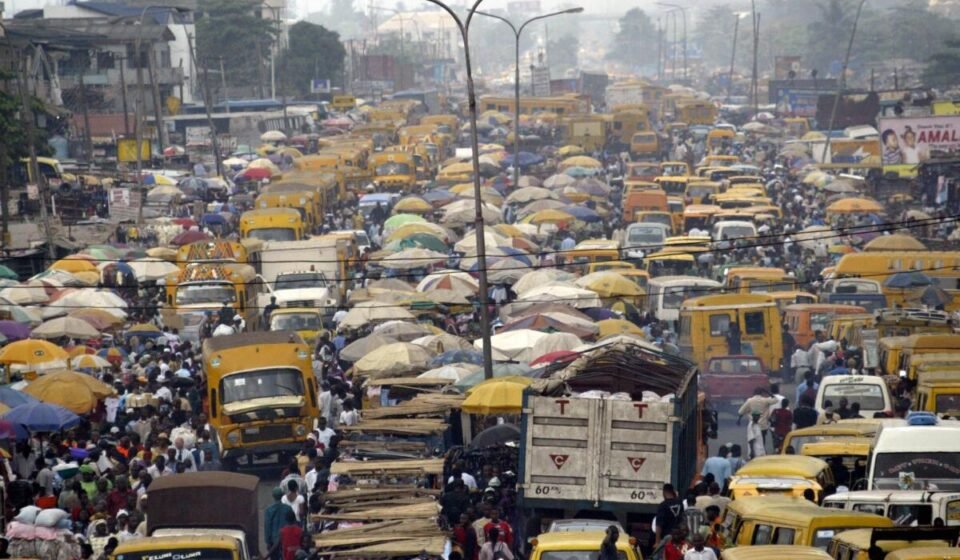

Picture a Lagos morning: the sun glaring like it’s auditioning for a role in a disaster movie, the streets more jammed than a weekend market, and every commuter’s patience stretched so thin it could snap at the slightest honk. Now, imagine a minister—or dare we say, a governor—stripped of sirens, bulletproof cars, and the usual entourage, forced into this urban battlefield.
The minister fumbles onto a packed danfo, elbowing for space while trying to maintain dignity. The conductor eyes them suspiciously: “You dey queue for seat, or you wan special treatment?” The minister hesitates, then tries to negotiate, offering a note that could probably feed a family of five. The conductor isn’t impressed. Lesson learned: democracy doesn’t run on VIPs alone.
Meanwhile, the governor is on foot, stuck behind a cluster of street hawkers. A bottle of water becomes the object of a tense standoff. “Price na 200,” says the hawker. “I’m a public servant!” protests the governor. “Na me get the street?” counters the hawker, offering a wink and a smile. Negotiation skills suddenly become real-life survival tools.
By noon, polished shoes are dusty, phone battery hovers perilously at 2%, and the politician has developed a newfound respect for the ordinary Nigerian commuter who navigates this chaos daily—sometimes in stilettos, sometimes in flip-flops, always with resilience.
It’s funny, yes. But it’s also telling: those who craft policy rarely endure the reality they legislate for. Perhaps, if politicians spent a day like this—without convoys, without shortcuts, just plain human grit—decisions might become a little more grounded, and the speeches a lot less lofty.
After all, empathy, like a good traffic plan, can’t just be theorised—it has to be lived.