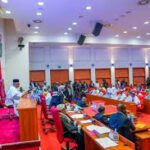



Nigeria’s biggest labour union has stirred the political pot just weeks before the next general election. The Nigeria Labour Congress (NLC) has warned of nationwide protests, strikes and even election boycotts in response to what it calls “confusion and contradictory narratives” from the Senate over the recently amended Electoral Act.
At the heart of the row is a change — or lack of one — to the way election results are electronically transmitted from polling units to central servers. Organised labour says the Senate’s failure to make real-time electronic transmission of results compulsory risks undermining public confidence in Nigeria’s electoral processes.
“There is deep concern over the confusion and contradictory narratives emerging from the Senate regarding the amendment to the 2022 Electoral Act,” NLC President Joe Ajaero said in a sharply worded statement on Sunday. “Nigerians deserve a transparent system where votes are not only counted but seen to be counted.”
What’s at Stake?
Under the bill debated by the Senate on 4 February, lawmakers rejected a proposed amendment that would have required INEC officials to transmit results electronically in real time from polling units directly to the national results portal after votes are signed and stamped.
Instead, the Senate retained the existing wording — clause that allows results to be transferred “in a manner as prescribed by the Commission” — leaving it largely at the discretion of the Independent National Electoral Commission (INEC). Critics say this does not guarantee instant, verifiable electronic uploads, and could re-open the door to manual manipulation or delays in collating results.
The House of Representatives had earlier passed the mandatory real-time transmission provision, setting the stage for a clash during the harmonisation of both chambers’ versions before the bill finally goes to the President.
For many observers, the fight isn’t just technical — it’s symbolic. Calls for electronic transmission arise from bitter memories of the 2023 general election, where allegations of result tampering, delayed uploads and distrust in manual collation dogged the process.
Labour: ‘Clarity or Chaos’
The NLC has made its position plain: unless the law clearly mandates real-time electronic transmission and collation, it will mobilise its nationwide network to push back.
“Failure to add electronic transmission in real time will lead to mass action before, during and after the election or total boycott of the election,” the union warned.
This is a serious threat in a country where organised labour has previously led impactful national actions. Some analysts are already comparing the current standoff to past flashpoints, such as the contentious Tax Acts reforms that triggered mass protests when legal language was perceived as muddled and poorly communicated.
Senate Responds, Critics Push Back
Senate President Godswill Akpabio has defended the chamber’s decision, insisting that electronic transmission was not scrapped, only the word “real-time” was removed to avoid legal or technical complications. He argued this gives INEC flexibility amidst concerns over network stability and security.
But civil society groups and opposition parties have not been mollified. They argue that without a clear, enforceable mandate, electronic transmission could become a hollow promise — leaving room for the kind of disputes that plagued previous polls.
Some organisations have called on the Senate to reconvene in an emergency session to reconsider the rejected clause, indicating that the fight over election transparency is far from over.
Why It Matters
For many Nigerians, this isn’t merely about technology. It’s about trust.
In a nation where elections often divide communities and make headlines for all the wrong reasons, clear rules that ensure results are not only accurate but visible in real time are seen as a cornerstone of democratic credibility.
As one civil society observer put it: “It’s not the gadgetry that’s important — it’s ensuring every voter believes their voice genuinely counts.”
Whether the Senate will yield to the rising tide of public opinion remains to be seen. But one thing is clear: the coming days could be decisive in shaping not just an electoral bill, but the fortunes of Nigeria’s democracy itself.