

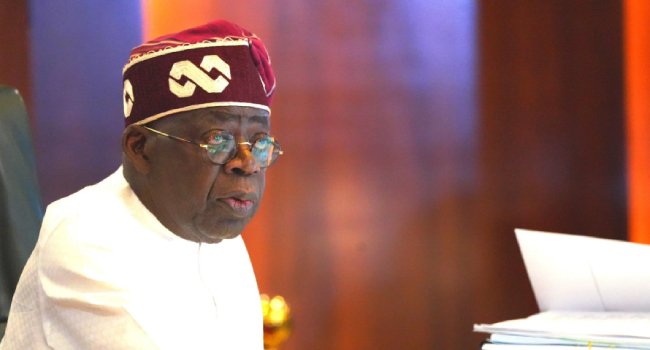

For President Bola Tinubu, Nigeria’s path to stability runs through its most vulnerable homes.
Speaking at the National Economic Council Conference on Inclusive Growth and Sustainable National Development in Abuja, the President returned to a familiar theme of his administration: that economic reform must translate into real relief for ordinary Nigerians if the country is to remain secure, united and hopeful.
“Nigeria’s diversity is our strength. When states grow, Nigeria grows. When growth reaches the poorest household, national stability is strengthened,” he said, framing inclusion not simply as an economic idea, but as a national survival strategy.
Reform, sacrifice and expectation
Since taking office in May 2023, Tinubu has pushed through sweeping — and often painful — economic reforms aimed at resetting Nigeria’s fiscal foundations. The removal of fuel subsidy and exchange-rate unification, widely reported by major financial and policy institutions, were designed to stabilise public finances and attract investment.
Yet for millions of Nigerians facing rising food prices, transport costs and inflation, the promise of long-term gain has felt distant. Against this backdrop, the President’s speech read as both reassurance and appeal: reassurance that hardship is temporary, and appeal for patience while reforms take root.
He described the Renewed Hope Agenda as a “national compact”, suggesting a shared burden between government and citizens. The language is politically significant — positioning sacrifice as collective rather than imposed.
Still, the credibility of that compact ultimately depends on visible improvement in daily life, something economists and civil society groups continue to debate.
Agriculture, infrastructure and the growth question
Tinubu pointed to agriculture modernisation, livestock investment and mechanised farming across Nigeria’s zones as key drivers of inclusive growth.
This emphasis aligns with long-standing expert consensus: agriculture remains Nigeria’s largest employer and a critical lever for poverty reduction. But past reform promises in the sector have often stumbled on weak implementation, insecurity in farming communities and poor rural infrastructure.
The President also highlighted infrastructure expansion — transport, power, digital connectivity and irrigation — alongside social investment programmes targeting youths, women and small businesses.
In policy terms, this reflects a classic development formula: stabilise the macro-economy → invest in productivity → expand social protection. Whether execution matches ambition remains the central question.
Monetary policy and global confidence
Tinubu argued that recent monetary reforms are already yielding positive results and attracting international recognition.
Indeed, multilateral lenders and ratings conversations have increasingly focused on Nigeria’s reform momentum. But global approval does not always translate into domestic comfort.
For households, the truer indicators are simpler:
-
Can food still be afforded?
-
Are jobs expanding?
-
Is transport cheaper or costlier?
Until these answers shift positively, public skepticism is likely to persist, regardless of favorable external reviews.
Federalism, revenue and governance at the states
One of the more concrete claims in the President’s address concerned improved revenue distribution to states and local governments. Increased allocations, he said, now enable sub-national authorities to pay salaries, build infrastructure and deliver services more reliably.
Analysts broadly agree that stronger state finances could deepen development — if funds are transparently managed. Nigeria’s governance history shows that revenue alone does not guarantee welfare outcomes. Accountability remains the missing bridge between allocation and impact.
Security as economic foundation
Tinubu also reaffirmed his administration’s determination to defeat terrorism and banditry, calling insecurity “unacceptable” and alien to Nigeria’s culture.
The link between security and growth is unmistakable. Farming, trade, schooling and investment all weaken where violence persists. Without meaningful security gains, even the most carefully designed economic reforms risk stalling.
The deeper test ahead
The President’s message at NEC was ultimately about trust — trust that reform pain will lead to shared prosperity, and trust that government policy will reach the poorest, not only the powerful.
History suggests Nigerians are willing to endure hardship when hope feels credible. But patience narrows when inequality widens or relief appears slow.
Tinubu’s central argument — that national stability depends on lifting the poorest — is difficult to dispute. The harder task is proving, month by month, that growth is no longer an abstract statistic but a lived reality in markets, farms, classrooms and homes.
That proof, more than any speech, will decide whether Nigeria’s current reform era becomes a turning point or another missed promise.