
Nigeria Seizes a Rare Global Stage As Babalola Emerge Rotary International President

In a moment of quiet pride for Nigeria’s service and goodwill community, the global spotlight is turning towards one of its own.
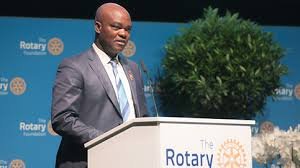
Olayinka Hakeem Babalola, a seasoned Nigerian Rotarian with more than 30 years of service, is set to take the helm of Rotary International — one of the world’s oldest and largest humanitarian organisations — as its President for the 2026-27 term. His appointment, formally confirmed by the Rotary International Board of Directors, marks only the second time ever that an African and Nigerian will lead the more than 1.2-million-member network.
For Nigeria — a nation familiar with both global distinction and heavy odds — this is more than just a title. It’s a chance to demonstrate what years of selfless service can achieve, and to project a narrative of hope far beyond the immediate challenges at home.
Mr Babalola’s Rotary journey began with Rotaract in the 1980s and matured through decades of leadership roles, from District Governor to Vice-President and Board Member. Known for his commitment to community development, peace-building and polio eradication efforts, he has worked side-by-side with Rotarians and local partners across Africa.
“Rotary transforms lives — not only through the projects we deliver, but through the hope we share, the meaningful relationships we build, and the shared purpose we inspire,” he said upon his election.
This human-centred mission resonates deeply in Nigeria, where Rotary volunteers have long been visible in health outreach, education, water and sanitation initiatives, and the fight to end polio — a battle in which Rotary has contributed hundreds of millions of dollars and relentless advocacy.
The first African to hold this role was Jonathan Babatunde Majiyagbe, who served more than two decades ago. His tenure was remembered as a milestone in bringing wider global recognition to African leadership in Rotary’s work.
Now, Mr Babalola’s elevation feels like a second wind — a chance not only for Nigeria to have a seat at the table, but to steer that table towards more inclusive and impactful action.
Across Nigeria, the announcement stirred voices of pride and encouragement. President Bola Tinubu congratulated Mr Babalola, calling the achievement historic and a source of national pride that will inspire young Nigerians to “lead transformative change with vision, integrity and dedication to service.”
But beyond political praise, the real story lies in the everyday people whose lives have been touched by Rotary projects: families who received clean water, children protected from disease, and communities equipped with tools for better health and education. For them, the news isn’t about a presidency — it’s about continuity and commitment to people-centred service.
As President-elect, Mr Babalola has outlined bold goals. He speaks of expanding Rotary’s global footprint, especially in Africa’s bustling business and population centres, ensuring that volunteer spirit is matched with strategic impact. The aim, he says, is not merely organisational growth, but meaningful outcomes — improved health, stronger livelihoods and more resilient communities.
In a world where headlines are often dominated by conflict and division, Nigeria’s moment at the helm of Rotary International is a reminder of what can happen when service becomes action, and action becomes change.