

Skip to content
Inside The Headline insidetheheadline Inside The Headline

The Story Behind The Story

Inside The Headline insidetheheadline Inside The Headline

The Story Behind The Story

  • Home
  • Features
    • Business Turf
    • Politics
    • Health
    • 2026 Elections
    • Diasporametrics
    • Entertainment
    • Arts Lens
    • Education
    • Sports
  • Specials
    • Profiles
    • Throwback Lounge
    • Podcast
    • Features
    • Market Place
  • Contact
  • Home
  • Features
    • Business Turf
    • Politics
    • Health
    • 2026 Elections
    • Diasporametrics
    • Entertainment
    • Arts Lens
    • Education
    • Sports
  • Specials
    • Profiles
    • Throwback Lounge
    • Podcast
    • Features
    • Market Place
  • Contact
Close

Search

  • https://www.facebook.com/
  • https://twitter.com/
  • https://t.me/
  • https://www.instagram.com/
  • https://youtube.com/
Subscribe
Inside The Headline insidetheheadline Inside The Headline

The Story Behind The Story

Inside The Headline insidetheheadline Inside The Headline

The Story Behind The Story

  • Home
  • Features
    • Business Turf
    • Politics
    • Health
    • 2026 Elections
    • Diasporametrics
    • Entertainment
    • Arts Lens
    • Education
    • Sports
  • Specials
    • Profiles
    • Throwback Lounge
    • Podcast
    • Features
    • Market Place
  • Contact
  • Home
  • Features
    • Business Turf
    • Politics
    • Health
    • 2026 Elections
    • Diasporametrics
    • Entertainment
    • Arts Lens
    • Education
    • Sports
  • Specials
    • Profiles
    • Throwback Lounge
    • Podcast
    • Features
    • Market Place
  • Contact
Close

Search

  • https://www.facebook.com/
  • https://twitter.com/
  • https://t.me/
  • https://www.instagram.com/
  • https://youtube.com/
Subscribe
Home/Arts Lens/Oil and Gas Recovery: Rig Counts Surge as Nigeria Courts Billions in Fresh Investment
Arts LensDiasporametrics

Oil and Gas Recovery: Rig Counts Surge as Nigeria Courts Billions in Fresh Investment

By olorimetsuda@gmail.com
February 4, 2026 3 Min Read
0

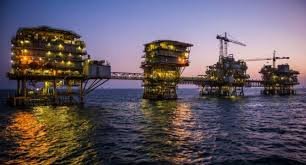
Nigeria’s oil and gas sector, long weighed down by uncertainty and underinvestment, is showing signs of a determined rebound. From a modest eight active rigs in 2021 to about 69 by late 2025, the sharp rise has become a potent symbol of renewed confidence in Africa’s largest energy producer—and a test of whether reform can finally translate into lasting growth.

At the 9th Nigeria International Energy Summit in Abuja, President Bola Tinubu struck an optimistic tone, declaring that the country had moved beyond an “inefficient” past. Speaking through Vice-President Kashim Shettima, he pointed to roughly $8 billion in fresh investment commitments and a reform agenda anchored on digital licensing, fiscal incentives and regulatory clarity under the Petroleum Industry Act (PIA).

For years, investors had complained of opaque processes, shifting rules and delayed project approvals. The administration now argues that transparency and competitive bidding are restoring trust. The message from the summit was clear: Nigeria is open for business again.

Yet the headline surge in rig numbers tells only part of the story. Industry analysts note that recovery from a very low base can produce dramatic percentages without immediately transforming output or revenue. Even so, the upward trend suggests operators are returning to fields once considered commercially uncertain, encouraged by improved pricing, policy signals and security interventions in the Niger Delta.

Tinubu’s broader ambition is bold. Under the government’s “Project One Million” framework, Nigeria hopes to lift crude production to 2.5 million barrels per day by 2027, while expanding gas output to 10 billion standard cubic feet per day by 2030. The emphasis on gas reflects a strategic shift: crude oil may still fund today’s budget, but natural gas is increasingly framed as the bridge to industrialisation, cleaner energy and job creation.

Recent data offer cautious encouragement. Average daily gas production has climbed to about 7.6 billion cubic feet, with domestic supply exceeding 2 billion cubic feet for the first time—an important threshold for power generation and manufacturing. If sustained, this could ease chronic electricity shortages that have long constrained economic growth.

Still, optimism sits alongside familiar doubts. Nigeria has announced ambitious production targets before, only to see them undermined by pipeline vandalism, crude theft, regulatory delays and global market volatility. Delivering on current promises will depend not only on attracting capital but also on maintaining security, policy consistency and infrastructure investment over several years.

At the summit, Minister of State for Petroleum Resources (Oil) Heineken Lokpobiri widened the lens beyond Nigeria, framing energy development as central to Africa’s fight against poverty. He described the gathering as a continental “call to action” and highlighted major projects—including Shell’s $5 billion Bonga North expansion and TotalEnergies’ $550 million Ubeta development—as evidence that international players are re-engaging.

Equally symbolic is the planned African Energy Bank, to be headquartered in Nigeria, which supporters say could help the continent finance its own hydrocarbon projects rather than relying solely on external lenders increasingly wary of fossil-fuel funding. Whether the bank becomes transformative or merely aspirational will depend on governance, capitalisation and geopolitical support.

The summit’s theme—Energy for Peace and Prosperity: Securing Our Shared Future—captured a deeper tension shaping Nigeria’s energy narrative. On one hand lies the urgent need for revenue, jobs and industrial power in a country of more than 200 million people. On the other sits the global push towards decarbonisation, which is steadily reshaping investment flows and long-term demand for fossil fuels.

Nigeria’s answer, for now, is pragmatic rather than ideological: maximise existing hydrocarbon resources while positioning gas as a “just transition” fuel. It is a balancing act many developing economies are attempting, with mixed results.

What emerges from the latest figures and summit declarations is neither a full recovery nor mere rhetoric, but something in between—a sector cautiously climbing back to relevance. The surge in rig activity signals momentum; sustained production, stable revenue and tangible benefits for ordinary Nigerians will determine whether that momentum becomes genuine transformation.

For a nation whose fortunes have long risen and fallen with oil, the stakes could hardly be higher.


Author

olorimetsuda@gmail.com

Follow Me
Other Articles
Previous

Security Beyond Headlines: How Insecurity is Undermining Nigeria’s Food Systems and Everyday Life

Next

What “Real-Time Electronic Transmission” Means — And Why It Matters

No Comment! Be the first one.

Leave a Reply Cancel reply

Your email address will not be published. Required fields are marked *

Recent Posts

  • National stability rests on lifting the poorest, Tinubu tells NEC
  • Nigeria’s Security Dilemma: Can Force Alone Keep the Peace?
  • Occupy National Assembly Protest Over E-Transmission Of Election Results Begins In Abuja
  • At the Gates of Power: Peter Obi, Protest Politics and Nigeria’s Debate on Real-Time Election Results
  • Appeal Court Backs Senate Suspension of Senator Natasha, Overturns Fine in Sharp Ruling

Recent Comments

No comments to show.

Archives

  • February 2026
  • October 2025
  • September 2025
  • February 2025

Categories

  • 2026 Elections
  • Arts Lens
  • Business Turf
  • Diasporametrics
  • Education
  • Entertainment
  • Features
  • Health
  • Opinion
  • Podcast
  • Politics
  • Profiles
  • Sports
  • Technology
  • Throwback
Hey, I’m Alex. I build frontend experiences and dive into tech, business, and wellness.
  • X
  • Instagram
  • Facebook
  • YouTube
Work Experience

Velora Labs

Frontend Developer

2021-present

Luxora Digital

Web Developer

2019-2021

Averion Studio

Support Specialist

2017-2019

Available for Hire
Get In Touch

Recent Posts

  • National stability rests on lifting the poorest, Tinubu tells NEC
    by olorimetsuda@gmail.com
    February 9, 2026
  • Plateau Battles Lassa Fever: 11 Cases, 4 Deaths Recorded Since December 2025
    by olorimetsuda@gmail.com
    February 8, 2025
  • The Hidden Potential of Bitcoin
    by olorimetsuda@gmail.com
    September 30, 2025
  • Morning Routines That Boost Your Productivity
    by olorimetsuda@gmail.com
    October 1, 2025

Search...

Technologies

Figma

Collaborate and design interfaces in real-time.

Notion

Organize, track, and collaborate on projects easily.

DaVinci Resolve 20

Professional video and graphic editing tool.

Illustrator

Create precise vector graphics and illustrations.

Photoshop

Professional image and graphic editing tool.

insidetheheadline
insidetheheadline

INSIDE THE HEADLINE is the premium news analysis platform for readers who demand more than headlines. We provide clarity, insight, and context, revealing the story behind the story.

  • Facebook
  • X
  • Instagram
  • LinkedIn

Latest Posts

  • When the Badge Fails to Reassure: Policing, Pain and the Quest for Justice
    On the streets of many nations, from Lagos to Nairobi,… Read more: When the Badge Fails to Reassure: Policing, Pain and the Quest for Justice
  • What “Real-Time Electronic Transmission” Means — And Why It Matters
    Electronic transmission of results refers to the process of sending… Read more: What “Real-Time Electronic Transmission” Means — And Why It Matters
  • Travel to Make Your Child Happy
    Life is often defined by big milestones, but the real… Read more: Travel to Make Your Child Happy

Pages

  • About
  • Contact
  • Profiles
  • Shop
  • Typography
  • Terms and conditions

Contact

Email

info@insidetheheadline.com

Location

Abuja, Nigeria

Copyright — Inside The Headline. All rights reserved.