

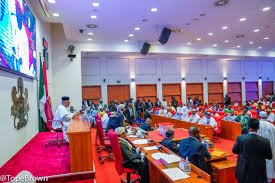

Nigeria’s Senate has called an emergency plenary session for Tuesday, 10 February 2026, in the midst of growing controversy over how election results should be transmitted under the newly amended Electoral Act.
In a terse circular issued on Sunday, the Clerk of the Senate, Emmanuel Odo, instructed lawmakers to assemble at the National Assembly at 12 noon. The notice, signed on the direction of Senate President Godswill Akpabio, gave no official reason for the sudden sitting — but it comes against sustained public pressure over the Senate’s handling of electronic result transmission provisions in the Electoral Act (Amendment) Bill 2026.
Controversy over E-Transmission
The row centres on Clause 60(3) of the amended Electoral Act, which deals with the electronic transfer of polling unit results. While the Senate retained a provision allowing results to be sent electronically — as already permitted under the 2022 Act — lawmakers rejected a proposed amendment that would have made real-time electronic transmission mandatory.
Critics have seized on the decision as a setback for transparency in the lead-up to the 2027 general election, arguing that without a legal obligation for results to be sent instantly from polling units, opportunities for manipulation remain.
The Nigeria Labour Congress (NLC) has threatened mass action unless real-time transmission clauses are restored or clarified during harmonisation with the House of Representatives version of the bill.
Some civil society voices have been even more forthright, describing the Senate’s stance as a blow to democratic reform and warning that undecided wording could institutionalise doubt in the electoral system.
Senate Leadership Defends Its Position
Senate President Akpabio insists the chamber did not reject electronic transmission of results outright, only the phrase “real time” from the draft legislation. He argues this was necessary to give the Independent National Electoral Commission (INEC) breathing space to decide how best to use technology, given patchy network coverage and infrastructure challenges in parts of the country.
“Electronic transmission remains permissible,” Akpabio said at a public event in Abuja, clarifying that removing “real time” was a practical measure aimed at avoiding legal challenges should networks fail on polling day.
Former Senate President David Mark, now chairman of the African Democratic Congress, echoed this point, saying INEC should test its own capability to transmit results and not have legislators speak for the commission.
Public Reaction: Outrage and Anxiety
Despite these explanations, many Nigerians remain unconvinced. Opponents of the Senate’s decision argue that without a statutory requirement for real-time uploads, electoral transparency will suffer, and the credibility of the voting process will remain in question.
Some civil society groups have called the Senate’s move a weakening of safeguards against results manipulation, while others have urged lawmakers to reconsider during the emergency sitting.
What’s Ahead
The emergency plenary on Tuesday is expected to focus on approving the votes and proceedings that would allow a joint conference committee of both chambers of the National Assembly to harmonise differences between their respective versions of the Electoral Bill. Without that step, the reform process — and crucially, clauses around election result transmission — cannot proceed.
As the countdown to next year’s elections continues, the Senate’s handling of these technical yet politically charged clauses has become a litmus test for Nigeria’s commitment to transparent and credible polls.