

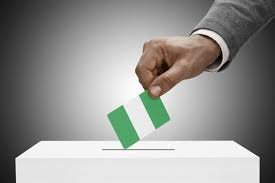

For millions of Nigerians living and working abroad, the idea of casting a ballot for a president or legislator back home is not just a political dream — it is a question of fairness and belonging. Their contributions are tangible: official remittances alone topped more than US$20 billion recently, helping sustain households and shore up Nigeria’s foreign exchange reserves. Yet, when election day comes around, they sit on the sidelines.
That contradiction has sparked spirited debate among activists, civil society groups, and some politicians: Should diaspora voting be a priority? Many would argue yes — but the path to real reform remains stuck in legal, political and institutional gridlock.
From the start, the argument for diaspora voting is straightforward: if citizens contribute to the country’s economy and remain subject to its laws, why should their voice in choosing leaders be limited by geography?
Early voices in support have emphasised both rights and practical impact. Student groups and diaspora organisations point out that millions of Nigerians abroad send money home, pay taxes in their host countries and maintain deep social ties with communities in Nigeria — yet they have no legal franchise.
In other democracies with large expatriate populations, overseas voting has become normal. It strengthens ties between citizens and the state and can improve accountability, because leaders have to answer to a broader electorate. In an era of widespread migration — with more than 300 million people living outside their country of birth globally — excluding such voices strikes some analysts as increasingly anachronistic.
Even at home, there has been sporadic political support: former lawmakers and commentators have urged constitutional recognition of diaspora voting, arguing it would mark “critical democratic growth and economic inclusion”.
Despite the moral case, progress has been painfully slow. The central reason is legal. Nigeria’s 1999 Constitution defines voting rights in terms of residency within the country. Sections of the constitution and the Electoral Act currently limit registration and voting to citizens living in Nigeria, meaning those overseas cannot automatically take part.
In practice, this has two consequences: Legislators must amend the constitution to extend voting rights — a process that requires broad political consensus. That consensus has not materialised.
Courts have said they cannot enforce diaspora voting simply on the basis of human rights arguments; the change must come through legislation, not judicial fiat.
So, while INEC (the electoral commission) has acknowledged the idea and even described diaspora inclusion as part of “incomplete” electoral inclusion, it has been clear that legal barriers bind it.
Beyond strict legality, political will has been in short supply. Attempts to amend the constitution in recent years have failed. In one notable instance, only 29 of 92 senators present supported diaspora voting provisions — far short of the two-thirds majority required.
Some lawmakers and party officials have raised practical concerns: how would the government verify overseas voters? Which state should diaspora votes be counted in? Could the process open the door to fraud? These issues are often presented as logistical obstacles rather than political calculations — though critics argue they are really excuses.
Editorial voices, including from Punch and national commentators, have accused legislators of fearing diaspora voters precisely because they are less susceptible to traditional vote-buying tactics and more likely to demand accountability and transparent governance.
Whether diaspora voting should be a priority depends on your view of Nigeria’s democratic trajectory. To proponents, it is a necessary evolution of the franchise — a way to deepen democracy, broaden participation and honour Nigerians’ global contributions. To critics, it is a secondary reform that should come only after fixing core electoral problems at home.
What is clear is this: the debate is far from academic. It touches on deep questions about national identity, fairness and the very nature of representation in a globalised world. For now, though, the legal and political machinery that would make diaspora voting a reality remains stalled — not for lack of argument, but lack of consensus and resolve.