
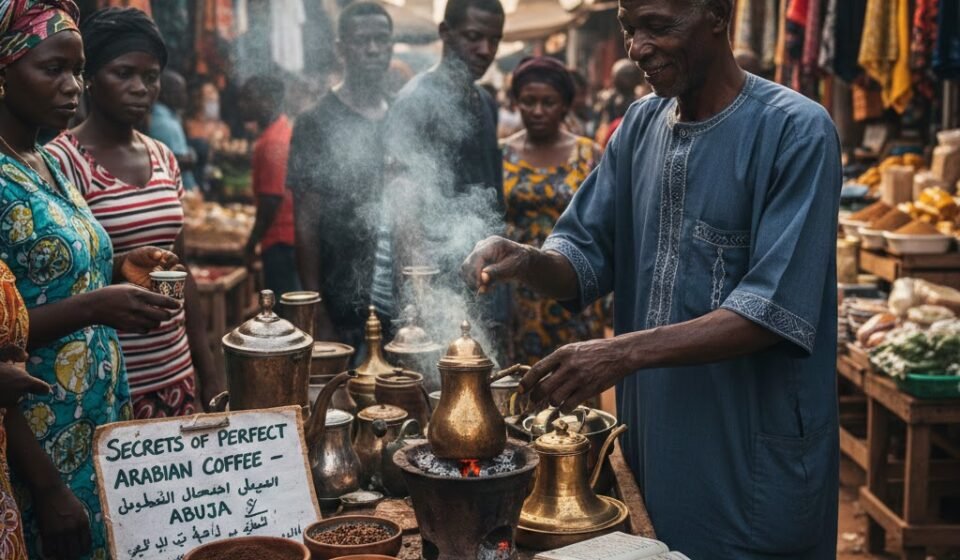

On the busy streets of Abuja, where the early morning rush collides with midday heat and evening calm, a distinct aroma is catching attention — not of roasted peanuts or suya, but of Arabian coffee, sometimes called qahwa or gahwa. What might seem at first like just another hip drink trend is actually a centuries-old ritual with roots deep in Middle Eastern culture — and increasingly, in Africa’s evolving coffee scene.
A Brew Steeped in Heritage
Arabic coffee isn’t just a beverage — it’s a story in a cup. Originating from Yemen in the 15th century and travelling across the Arabian Peninsula over centuries, qahwa grew to become a symbol of hospitality, ceremony and social exchange. Traditionally, it is brewed from lightly roasted Arabica beans and infused with fragrant spices such as cardamom — though variations may include cloves, saffron or cinnamon.
Unlike the glossy espresso shots or sugary lattes found in many modern cafés, Arabian coffee is typically served black, in tiny handle-less cups called finjān. The goal isn’t a bitter kick or milky foam, but a fragrant, warming sip that invites company and conversation.
The Ritual of Making It Right
Ask any stall or café owner in Abuja who has embraced this tradition and they’ll tell you the secret lies in patience, spice and story.
• Light Roast, Deep Aroma: Arabica beans are roasted gently so they keep their natural aroma but don’t burn. This mild roast contributes to a clearer, lighter colour and smoother taste, a signature of authentic qahwa.
• Harmony in Spices: Cardamom is king — it’s the spice most often added to bring out a sweet-aromatic note. For special cups, tiny threads of saffron or a hint of cloves are added for depth and warmth.
• Slow Simmer, No Rush: Unlike Western coffee preparation, Arabian coffee is not rushed. The beans and spices are simmered together in water, traditionally in a dallah pot, over a gentle heat for around 10–20 minutes, allowing flavours to truly bloom.
For many in Abuja, presenting coffee in this way isn’t just a brewing method — it’s a welcoming gesture, echoing the hospitality the drink represents in the Gulf and Bedouin traditions.
From Middle East to African Metropolis
Coffee culture in Nigeria has historically revolved around instant sachets and Western-style café brews. But that’s changing. Across urban centres like Abuja, consumers — especially younger professionals — are showing greater appreciation for diverse coffee styles and artisanal brews. This shift mirrors a broader movement: rising interest in premium beans, local sourcing, and global coffee trends blending with local tastes.
In street markets and boutique cafés alike, the aroma of Arabian coffee invites curiosity. People sip slowly, pair it with sweet dates or local snacks, and trade stories just as visitors would in Riyadh or Muscat. Once seen as exotic, this style of coffee is now part of Abuja’s dynamic food scene — a small yet telling sign of how global cultures are finding fresh life in Nigerian streets and teacups.