

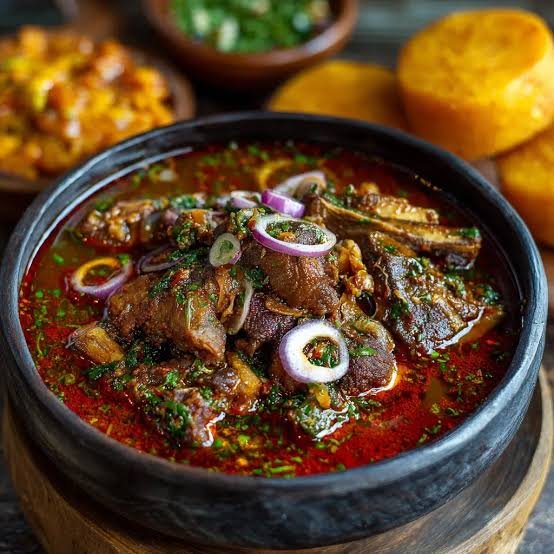

From the ebb and flow of creeks to the bustle of roadside markets, the Niger Delta isn’t just a place on a map — it’s a feast for every sense. For travellers and food lovers alike, this sprawling, watery heartland of southern Nigeria offers a unique blend of culture, community and cuisine that deserves a place on every culinary bucket list.
Cruise through towns like Warri, Port Harcourt and Yenagoa, and you’ll quickly realise that food here is more than just fuel — it’s identity, history and celebration on a plate. The Delta’s position between river and sea shapes its diet: fresh seafood features in nearly every kitchen, palm oil is poured generously into stews, and spices are lively without being overwhelming.
At its core is Banga Soup, perhaps the region’s most famous signature. Made from the rich extract of palm fruit and often simmered with fresh fish or smoked catfish, this deep-flavoured stew is typically enjoyed with starch — a glossy, sticky cassava dough that locals scoop up by hand. Each mouthful tells a story of fertile wetlands and generations of cooks perfecting the recipe.
Not far behind in popularity is Owo Soup, a creamy, yellow-hued delight made with palm oil and local spices, traditionally served with yam or plantain. Its smooth texture and aromatic taste make it a favourite during festive gatherings and family celebrations.
Seafood lovers will savour dishes like Kabari Fulo, a spicy Ijaw seafood stew brimming with prawns, crab and periwinkles, and Kekefiyai, a plantain and seafood pottage that whispers of rainy-season kitchens and bright, earthy flavours.
Travel writers note that the culinary landscape here isn’t confined to traditional soups. Along bustling streets in Delta towns, smoke-kissed plantain wraps known as Bòlé and Fish are served up from open-flame grills, offering a perfect balance of sweetness, fire and smoky char.
But it isn’t all rosy. Despite the richness of the cuisine, the Delta’s communities face real challenges. A 2024 review by the London School of Economics found that decades of oil spills and environmental degradation have damaged farmland and disrupted the production of staple crops like cassava and yam — staples that underpin many beloved local dishes. This environmental cost adds a layer of poignancy to every plate.
For visitors, the Delta’s food scene is not only about taste — it’s about connection. Sitting down to share a bowl of soup or a plate of grilled fish with locals offers a warm window into hospitality that many travellers describe as unforgettable. Whether enjoyed in a lively street setting or a welcoming local restaurant, each meal is part of an unfolding story of place, people and pride.