
Skip to content
Inside The Headline insidetheheadline Inside The Headline

The Story Behind The Story

Inside The Headline insidetheheadline Inside The Headline

The Story Behind The Story

  • Home
  • Features
    • Business Turf
    • Politics
    • Health
    • 2026 Elections
    • Diasporametrics
    • Entertainment
    • Arts Lens
    • Education
    • Sports
  • Specials
    • Profiles
    • Throwback Lounge
    • Podcast
    • Features
    • Market Place
  • Reading Nooks & Crannies
    • RNC 2026
    • Sponsorship | Partnership
    • Read a Story
    • About RNC
    • Our Team
    • More
      • Privacy Policy
      • Volunteer
      • Opportunities
  • Contact
  • Home
  • Features
    • Business Turf
    • Politics
    • Health
    • 2026 Elections
    • Diasporametrics
    • Entertainment
    • Arts Lens
    • Education
    • Sports
  • Specials
    • Profiles
    • Throwback Lounge
    • Podcast
    • Features
    • Market Place
  • Reading Nooks & Crannies
    • RNC 2026
    • Sponsorship | Partnership
    • Read a Story
    • About RNC
    • Our Team
    • More
      • Privacy Policy
      • Volunteer
      • Opportunities
  • Contact
Close

Search

  • https://www.facebook.com/
  • https://twitter.com/
  • https://t.me/
  • https://www.instagram.com/
  • https://youtube.com/
Subscribe
Inside The Headline insidetheheadline Inside The Headline

The Story Behind The Story

Inside The Headline insidetheheadline Inside The Headline

The Story Behind The Story

  • Home
  • Features
    • Business Turf
    • Politics
    • Health
    • 2026 Elections
    • Diasporametrics
    • Entertainment
    • Arts Lens
    • Education
    • Sports
  • Specials
    • Profiles
    • Throwback Lounge
    • Podcast
    • Features
    • Market Place
  • Reading Nooks & Crannies
    • RNC 2026
    • Sponsorship | Partnership
    • Read a Story
    • About RNC
    • Our Team
    • More
      • Privacy Policy
      • Volunteer
      • Opportunities
  • Contact
  • Home
  • Features
    • Business Turf
    • Politics
    • Health
    • 2026 Elections
    • Diasporametrics
    • Entertainment
    • Arts Lens
    • Education
    • Sports
  • Specials
    • Profiles
    • Throwback Lounge
    • Podcast
    • Features
    • Market Place
  • Reading Nooks & Crannies
    • RNC 2026
    • Sponsorship | Partnership
    • Read a Story
    • About RNC
    • Our Team
    • More
      • Privacy Policy
      • Volunteer
      • Opportunities
  • Contact
Close

Search

  • https://www.facebook.com/
  • https://twitter.com/
  • https://t.me/
  • https://www.instagram.com/
  • https://youtube.com/
Subscribe
Home/Features/Water Crisis in Nigerian Cities: Who’s Really Responsible?
FeaturesOpinionPolitics

Water Crisis in Nigerian Cities: Who’s Really Responsible?

By OLORIMETSUDA
September 1, 2025 3 Min Read
0

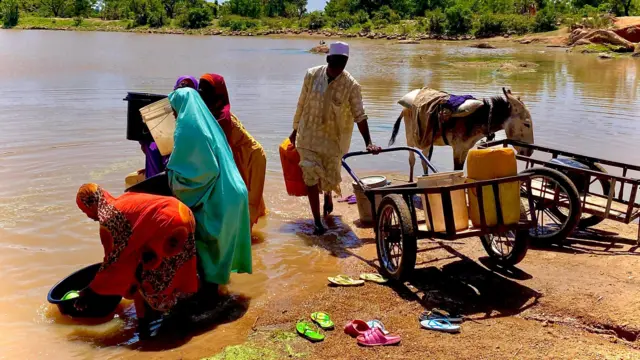
Water is life. Simple, clear, undeniable. Yet across Nigeria’s biggest cities, clean and reliable water still behaves like a seasonal visitor—appearing briefly, then disappearing without warning. From Lagos to Kano, Port Harcourt to Abuja, the story rarely changes: taps cough out air, boreholes become family heirlooms, and queues for a single bucket begin to look like early-morning prayer lines.

So, who exactly should carry the blame? (And no, we can’t blame the sun alone—even though it certainly looks guilty.)

Let’s be honest. Nigeria’s water shortage did not wake up one morning and decide to cause trouble. It is the child of long years of neglect, weak planning, and priorities that sometimes wander off like goats in an open field.

Government—federal, state, and local—sits at the centre of this story. And the uncomfortable question remains: have they truly done enough?

In Lagos, energy never sleeps, traffic never rests, and sadly, water rarely runs.

The city keeps expanding at breathtaking speed, but the pipes underneath tell a slower, more worrying tale. Ageing infrastructure, limited funding, and constant population growth have stretched public water supply close to breaking point.

As a result, many residents depend on private water vendors whose prices rise faster than fuel during scarcity. Others gamble with unsafe sources—because thirst, unlike policy meetings, cannot be postponed.

Election promises often sound refreshing. Unfortunately, the water itself does not always follow. At the national level, policies exist. Plans are announced. Committees are formed. Everything looks organised—on paper. But implementation? That is where the pipe often leaks.

Poor coordination between agencies, slow project execution, and the ever-present whisper of corruption mean that funds meant to bring water closer to the people sometimes evaporate before reaching the ground. Meanwhile, cities keep growing, demand keeps rising, and infrastructure keeps struggling to keep up.

Local authorities should be the quickest responders. After all, they are closest to the communities and closest to the broken taps.

Yet across many areas, water schemes fail and stay broken for months—sometimes years—like abandoned New Year resolutions. Limited technical capacity, weak funding, and in some cases simple indifference leave residents to solve a public problem with private pockets.

Before we point fingers endlessly at government, a gentle truth: citizens are not completely innocent spectators.

Water waste, illegal pipe connections, and pollution of local water sources quietly worsen the crisis. If water were treated with the same care Nigerians give to mobile data bundles, the story might already look different.

Yes, leadership matters.
But everyday behaviour matters too.

The Real Question Is Not Blame—But Action! Clean water is not a luxury item. It is not perfume, not Wi-Fi, not weekend enjoyment. It is a basic human right. Without it:
  • Health declines

  • Businesses suffer

  • Daily life becomes unnecessarily hard

What Nigeria’s cities need now is not another speech but serious urgency:

  • Strong investment in modern water infrastructure

  • Transparent use of public funds

  • Community participation in protecting water systems

  • Citizens demanding accountability—politely, firmly, persistently

The honest answer is simple: everyone, in different ways.

Government must lead with integrity and action.
Communities must protect shared resources.
Citizens must value every drop.

Because in the end, the future of Nigerian cities will not be decided by rainfall alone—but by responsibility.

And the clock, as always in Nigeria, is ticking…
probably faster than the water meter.

Author

OLORIMETSUDA

Follow Me
Other Articles
Previous

Nigeria Seizes a Rare Global Stage As Babalola Emerge Rotary International President

Next

The Eternal Nigerian Queue: Olympics Should Take Notes

No Comment! Be the first one.

Leave a Reply Cancel reply

Your email address will not be published. Required fields are marked *

Recent Posts

  • Why Nigeria’s Hustle Culture Is Both a Lifeline and a Loop
    by JENROLATEMI
    February 14, 2026
  • The Future of Artificial Intelligence in Daily Life: A New Dawn or a Quiet Revolution?
    by Chief Editor
    January 5, 2025
  • Nigeria Seizes a Rare Global Stage As Babalola Emerge Rotary International President
    by OLORIMETSUDA
    September 1, 2025
  • Water Crisis in Nigerian Cities: Who’s Really Responsible?
    by OLORIMETSUDA
    September 1, 2025

Search...

Technologies

ASHERS TENT MEDIA

Media Lobbying | Brand Consultancy

METSUDA
DaVinci Resolve 20

Professional video and graphic editing tool.

Illustrator

Create precise vector graphics and illustrations.

Photoshop

Professional image and graphic editing tool.

insidetheheadline
insidetheheadline

INSIDE THE HEADLINE is the premium news analysis platform for readers who demand more than headlines. We provide clarity, insight, and context, revealing the story behind the story.

  • Facebook
  • X
  • Instagram
  • LinkedIn

Latest Posts

  • Why Nigeria’s Hustle Culture Is Both a Lifeline and a Loop
    In Nigeria today, “hustle culture” is not just a trendy… Read more: Why Nigeria’s Hustle Culture Is Both a Lifeline and a Loop
  • When the Badge Fails to Reassure: Policing, Pain and the Quest for Justice
    On the streets of many nations, from Lagos to Nairobi,… Read more: When the Badge Fails to Reassure: Policing, Pain and the Quest for Justice
  • When NEPA Becomes a Lifestyle Coach: Lessons in Patience
    In Nigeria, electricity isn’t just a utility—it’s a life teacher.… Read more: When NEPA Becomes a Lifestyle Coach: Lessons in Patience

Pages

  • About
  • Contact
  • Profiles
  • Shop
  • Typography
  • Terms and conditions

Contact

Email

info@insidetheheadline.com

Location

Abuja, Nigeria

Copyright — Inside The Headline. All rights reserved.