

“We Will Prevail”: Tinubu’s Pledge to Defeat Terrorism and Banditry and Rebuild Hope

President Bola Tinubu has delivered a firm message to Nigerians: the twin scourges of terrorism and banditry that have darkened many lives across the country must — and will — be defeated.
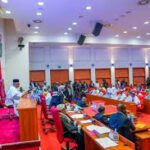
Speaking on Monday at the opening of the second National Economic Council (NEC) Conference in Abuja, Mr Tinubu acknowledged what many Nigerians feel every day — that insecurity has become a relentless burden, stealing sleep and costing lives, livelihoods and confidence. “It’s what has kept all of us sleepless at night,” he said, emphasising that violent crime is “unacceptable” and “alien to our culture.”
A Security Crisis With Real Cost
Tinubu did not shy away from linking insecurity directly to Nigeria’s economic challenges, warning that terrorism and banditry now represent serious obstacles to growth. “It’s an economic hindrance if we do not find immediate solutions to it,” he said — a sentiment echoed by other leaders at the gathering.
For many Nigerians, this recognition rings true. Communities in the northwest and north-east continue to bear the brunt of attacks by armed groups, with occasional violent incidents — like recent killings in parts of Kwara State — serving as grim reminders of the stakes.
Praise for Governors and Frontline States
In his address, Tinubu singled out governors from Borno, Katsina and Kaduna — states that have faced some of the worst insecurity — for their role in defending lives and protecting citizens. Their efforts, he said, are part of a collective national defence against violent crime.
This acknowledgment was likely meant to reassure Nigerians that state and federal leaders are aligned in facing the country’s security trials.
Promises of Strengthened Forces and Renewed Plans
To turn words into action, the president vowed to boost support for security forces, promising to explore “more ways” to strengthen them against organised violence. That pledge echoes past government emphasis on modernising the armed forces and improving intelligence coordination.
But Tinubu also tied this security push to a broader vision — the Renewed Hope National Development Plan 2026–2030, which frames security, economic growth and social investment as interlinked imperatives.
Economy, Inclusion and Resilience
Beyond security, the president highlighted efforts to shore up Nigeria’s economy. His administration claims progress on stabilising inflation, improving revenue flows, and strengthening public financial management. Social programmes aimed at vulnerable groups, youths and small businesses were cited as part of a push for inclusive growth.
Yet for many ordinary Nigerians, talk of macroeconomic stability still rings distant from daily realities of inflation, unemployment and insecurity — issues that have fuelled widespread scepticism about government promises.
Ground Realities and Public Sentiment
While the president’s assurances are clear, independent observers and public commentators have voiced frustration that previous pledges have not yet translated into noticeable improvements in security for many communities. Some argue that bold promises need to be matched by equally robust strategies on the ground, including better-resourced protection for farmers, towns and vulnerable regions. (Public sentiment noted from community discussions and social commentaries.)
A Long Road Ahead
Tinubu’s message at the NEC conference was unmistakable: the fight against terrorism and banditry is far from over, but the government remains resolute. Whether this determination will yield tangible peace and prosperity — and restore trust among citizens weary of violence and uncertainty — remains the central test of his leadership in the coming years.