

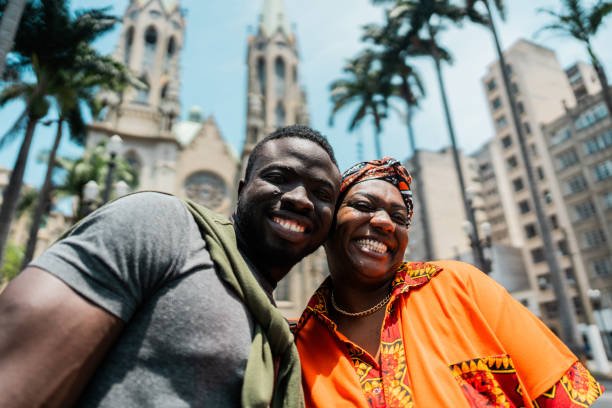

For millions of Nigerians living abroad, the idea of home is anything but straightforward. It is not just a dot on the map or the place your passport points to. It is a feeling that sneaks up on you in the middle of a cold morning, a memory hidden inside the smell of pepper soup, and sometimes a quiet ache you cannot quite explain.
As Nigerians spread across cities like London, New York City, Dubai and Johannesburg, the question of where they truly belong follows closely behind—like that one relative who refuses to end a phone call.
Home is often where family is. But for many Nigerians overseas, family now lives in different time zones, which means someone is always awake when someone else is fast asleep. Pride in culture remains strong—music, food, language, and the stubborn belief that Nigerian jollof is still the world champion (no debate, please). Yet daily life abroad brings new customs, unfamiliar systems, and sometimes the uncomfortable feeling of being quietly labelled the outsider.
Take Amina, a young Nigerian in the UK. She laughs as she explains how the smell of jollof rice or the sound of Pidgin English on a phone call can instantly transport her thousands of miles back home. “No matter how far I go, Nigeria travels with me,” she says. Still, she admits belonging is not always simple. “Some days you feel stuck between two worlds—too Nigerian for here, too foreign for there. It’s like your heart is doing immigration checks every morning.”
Her story is far from unique. Many Nigerians abroad walk the careful line between holding tightly to their roots and learning to fit into new surroundings. Over time, home begins to shift. It becomes the Nigerian church that serves rice after service, the weekend owambe in a rented hall, or the small shop where someone finally pronounces your name correctly. In those moments, belonging feels possible again.
Technology helps, of course. Video calls, WhatsApp voice notes, and family group chats buzzing at odd hours make distance feel smaller—though they also guarantee you will never escape messages asking when you are “coming home for good.” Even with constant connection, the longing for home does not completely disappear. It simply changes shape.
Belonging, in the end, is bigger than nationality. It lives in shared laughter, familiar flavours, and the comfort of being recognised without needing to explain yourself. Nigerians in the diaspora remind us that home can be many things at once—a country, a community, a memory, or even a Sunday meal eaten with people who understand your story.
In a world that grows more connected each day, their experiences offer a gentle lesson in empathy and resilience. Home, it seems, is not always where you start or where you settle. Sometimes, it is the journey you carry within you—seasoned with hope, humour, and just enough homesickness to keep the heart honest.